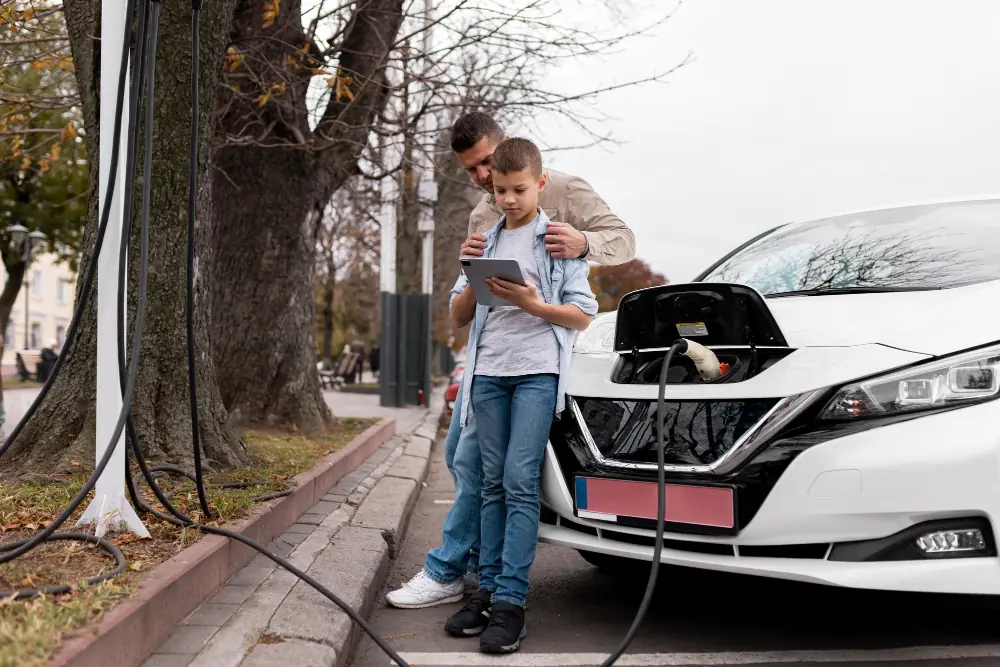
EV roadside assistance and charging in India is a 24×7 service that reaches stranded electric vehicles with mobile charging units, battery diagnostics, and towing to the nearest charger. When your EV runs out of range or the battery fails mid-journey, trained technicians restore enough charge to get you moving or safely relocate the vehicle.
What Is EV Roadside Assistance?
EV roadside assistance is emergency support built specifically for electric vehicles. Unlike petrol or diesel breakdown help, it deals with depleted batteries, charging faults, and high-voltage systems that ordinary mechanics are not trained to handle.
A typical service covers three things: mobile charging to add range on the spot, on-site diagnostics for battery and motor faults, and flatbed towing to the nearest working charger or service centre. Because EVs cannot be push-started or refuelled from a can, the response model is fundamentally different from conventional roadside support.
In practice, most stranded EV calls in India fall into two buckets: drivers who misjudged remaining range, and drivers who reached a charger that was offline or occupied. Both leave the vehicle stationary with no quick fix unless a mobile unit arrives.
How Does Emergency EV Charging Work?
Emergency EV charging brings power to your vehicle instead of the other way round. A response van carries a portable battery pack or generator-backed charger that connects to your car through a standard AC or DC connector.
The goal is not a full charge. It is enough range, usually 15 to 40 km, to reach the nearest reliable charging station. Here is how a typical call plays out:
- You share your location and vehicle model when you call for EV breakdown assistance in India.
- The nearest mobile unit is dispatched, and you receive an estimated arrival time.
- The technician verifies your charge port type and connects the portable charger.
- Your EV gains enough range in 20 to 45 minutes to drive to a full station.
- If charging is not viable, the vehicle is towed on a flatbed.
We have seen that flatbed towing matters more for EVs than for petrol cars. Many electric vehicles cannot be towed with wheels on the ground without risking damage to the motor or regenerative braking system, so a proper EV recovery vehicle is essential.
Why EVs Need Specialised Roadside Support
Electric vehicles carry high-voltage systems that make untrained handling dangerous. A damaged battery pack can pose fire or shock risks, so responders need EV-specific training and equipment.
Range anxiety is also a genuine operational problem, not just a feeling. Charging infrastructure across Indian highways is still uneven, and a working charger on the map may be broken, queued, or incompatible with your connector when you arrive.
Two original insights from handling these calls:
- Cold and heat both shrink usable range. Summer air-conditioning loads and hilly terrain can cut real-world range by 20 to 30 percent below the rated figure, catching drivers off guard on longer trips.
- Connector mismatch strands more drivers than empty batteries. A significant share of “no charge” emergencies happen at stations that work fine but use a connector standard the vehicle does not support.
EV vs Conventional Roadside Assistance
| Feature | EV Roadside Assistance | Conventional Roadside Assistance |
| Main issue | Depleted battery, charging fault | Empty fuel tank, engine trouble |
| On-spot fix | Mobile charging (15 to 40 km range) | Fuel delivery, jump start |
| Towing method | Flatbed only (wheels off ground) | Standard tow often possible |
| Technician skill | High-voltage EV training | General mechanical training |
| Response equipment | Portable charger, DC unit | Fuel can, tools, jumper cables |
What to Do If Your EV Runs Out of Charge
If your battery hits zero on the road, safety comes first, then the call for help.
- Move the vehicle to the road shoulder while it still rolls, if possible.
- Switch on hazard lights and place a warning triangle behind the car.
- Note your exact location using a maps pin or nearby landmark.
- Call EV roadside assistance and share your model and connector type.
- Stay with the vehicle in a safe spot until the mobile charging unit arrives.
Avoid pushing the car long distances or attempting to tow it yourself. EV drivetrains and regenerative braking can be damaged by improper towing, turning a simple recharge into an expensive repair.
How to Choose a Reliable EV Roadside Provider
The best way to pick a provider is to check coverage, response time, and EV-specific capability before you need them, not during an emergency.
Look for genuinely 24×7 dispatch, mobile charging support for electric vehicles across your regular routes, flatbed recovery rather than wheel-lift towing, and technicians trained on high-voltage systems. Highway coverage matters most, since that is where range runs out farthest from a charger.
We recommend saving the provider’s number in your phone and confirming your vehicle’s connector type is supported before a long trip. A few minutes of prep prevents hours stranded on a highway shoulder.
Frequently Asked Questions
What is EV roadside assistance and charging in India? It is 24×7 emergency support for electric vehicles that reaches stranded drivers with mobile charging, battery diagnostics, and flatbed towing. Trained technicians add enough range to reach a full station or safely relocate the vehicle when charging on the spot is not possible.
How long does emergency EV charging take? On-spot mobile charging usually adds 15 to 40 km of range in about 20 to 45 minutes. This is not a full charge but enough to reach the nearest reliable charging station, where you can top up completely before continuing your journey.
Can any tow truck move a stranded electric vehicle? No. Most EVs need flatbed towing with all wheels off the ground. Standard wheel-lift towing can damage the electric motor and regenerative braking system, so always insist on a proper flatbed EV recovery vehicle for emergency transport.
How much does EV roadside assistance cost in India? Costs vary by provider, distance, and whether mobile charging or towing is needed. Many EV owners get basic roadside cover bundled with insurance or the vehicle warranty, so check your existing plan before paying separately for a standalone emergency call.
What causes most EV breakdowns on Indian roads? The two biggest causes are misjudged range and unreliable charging stations. Chargers shown as available may be offline, occupied, or use an incompatible connector, leaving drivers stranded even when the battery itself is perfectly healthy.
Can I prevent running out of charge on a long trip? Yes. Plan charging stops in advance, keep a 20 percent buffer for AC use and terrain, and confirm your connector type matches stations on your route. Saving an EV roadside assistance number adds a reliable backup if plans change.
Conclusion
EV roadside assistance and charging in India closes the biggest gap in electric mobility: what happens when the battery dies far from a working charger. With mobile charging, EV-trained technicians, and flatbed recovery, a stranded electric vehicle becomes a solvable problem rather than a stranded afternoon. Save a trusted provider’s number, know your connector type, and keep a range buffer, and long EV journeys stay stress-free.
Leave a Reply
You must be logged in to post a comment.