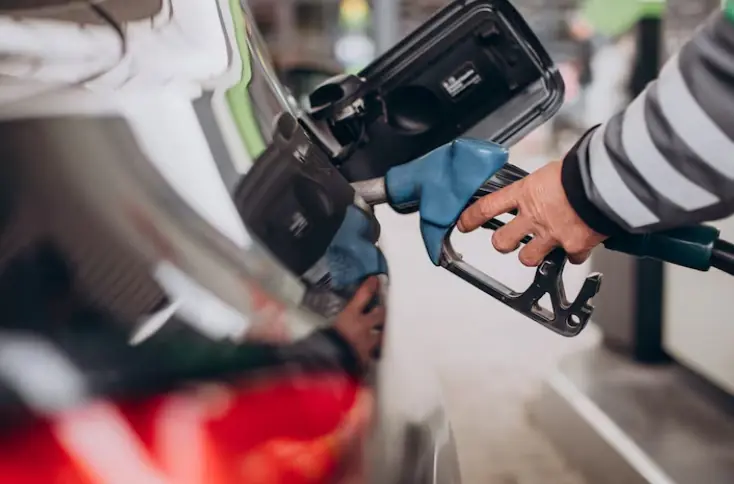
If you filled up your car at a Delhi petrol pump this week, you paid ₹102.12 per litre for petrol and ₹95.20 per litre for diesel — prices that would have seemed extraordinary just five years ago and that are now simply the new normal for Indian drivers navigating a fuel landscape that has shifted more dramatically in the last three years than in the previous two decades combined.
Car fuel in India in 2026 is no longer a straightforward choice between petrol and diesel. It is a decision that involves six distinct fuel types — petrol, diesel, CNG, ethanol-blended E20 fuel, LPG, and electric — each with its own cost economics, infrastructure availability, environmental profile, vehicle compatibility requirements, and long-term ownership implications. Getting this choice right can save a Delhi commuter ₹50,000 or more in running costs over three years. Getting it wrong adds that cost unnecessarily.
Beyond the purchase decision, every existing car owner needs to understand how current fuel prices affect their running costs, what adulteration risks exist, how the government’s ethanol blending programme is changing the fuel composition of every litre of petrol sold in India, what to do when the fuel gauge hits zero in the wrong location, and how fuel-related emergencies are handled professionally when they happen on the road.
This complete guide covers everything Indian car owners need to know about car fuel in 2026 — the types available, the current prices and what drives them, the running cost economics by fuel type, the ethanol blending programme and its vehicle compatibility implications, fuel quality and adulteration issues, fuel efficiency tips for Indian road conditions, the most common fuel-related car problems and their solutions, and how Crossroads Helpline provides 24/7 emergency fuel delivery and breakdown assistance when fuel emergencies happen anywhere in India.
The Six Car Fuel Types Available in India in 2026
Petrol — The Default That Is Becoming Expensive to Own
Petrol remains the most widely used car fuel in India despite its current price pressure. At ₹102.12 per litre in Delhi as of June 2026, petrol-fuelled cars offer the widest choice of models, the most developed refuelling infrastructure, and the most flexible ownership experience — but they now carry the worst running cost economics of any fuel type for high-mileage urban commuters.
Petrol engines use a spark plug to ignite a petrol-air mixture in a combustion cycle that produces power through a series of controlled explosions. Modern BS6-compliant petrol engines are significantly cleaner than their predecessors, with advanced fuel injection systems, particulate filters, and emission control technologies that meet the stringent BS6 Phase 2 norms implemented across India.
At current prices, petrol costs approximately ₹6 to ₹8 per kilometre for a typical Indian car achieving 15 to 18 km/l on urban roads. For a driver covering 1,500 km per month — a fairly typical urban commuting distance — the monthly petrol cost at current Delhi prices is approximately ₹8,500 to ₹10,200. This cost has become the primary driver of the shift toward CNG, hybrid, and electric alternatives that characterises the Indian car market in 2026.
Pure petrol cars carry the worst total cost of ownership equation in the current fuel price environment for any driver covering more than 1,000 km per month. For low-mileage drivers covering 500 to 700 km monthly, the lower purchase premium of a petrol car versus CNG or hybrid alternatives still makes petrol viable on a total ownership cost basis.
Diesel — Shrinking Share, Rising Cost, Complex Future
Diesel at ₹95.20 per litre in Delhi in June 2026 is only ₹6.92 per litre cheaper than petrol — a premium gap that has narrowed significantly from the ₹25+ difference that made diesel vehicles the default choice for high-mileage users just five years ago. The narrowing premium, combined with the higher purchase cost of diesel engines and the increasing difficulty of reselling diesel vehicles in metros, has dramatically reduced diesel’s economic advantage over petrol.
Diesel engines operate on compression ignition rather than spark ignition — compressing the air-fuel mixture to the point of spontaneous combustion, which produces the high torque and fuel efficiency that made diesel the preferred choice for highway driving, towing, and long-distance travel. Diesel still offers advantages for drivers covering significant highway distances at consistent speeds, but these advantages have diminished as the price premium has narrowed.
The diesel vehicle market in India is contracting in smaller segments. Several manufacturers have discontinued diesel variants of hatchbacks and compact sedans, concentrating diesel availability in SUVs, MPVs, and commercial vehicle segments where the torque and efficiency advantages are most relevant. The Tata Harrier diesel, Toyota Fortuner diesel, Mahindra Scorpio N diesel, and Kia Carnival diesel remain strong sellers, but the overall diesel share of new passenger vehicle registrations has declined consistently.
For existing diesel car owners, the narrower price premium versus petrol means the economic case for their choice is weaker than when they made it — but the superior highway fuel efficiency of diesel engines still provides meaningful advantages for genuinely high-mileage highway users.
CNG — The Running Cost Champion for Urban Commuters
CNG (Compressed Natural Gas) at ₹75 to ₹85 per kg across metros is currently the most economical fuel type for high-mileage urban Indian car owners. Running costs on CNG can be up to 50 percent lower than petrol — a number that has become a decisive purchasing factor for families facing petrol bills above ₹8,000 per month.
CNG vehicles are bi-fuel — they run on petrol or CNG with a switch, so drivers are never genuinely stranded if a CNG pump is not immediately available. The bi-fuel capability removes the range anxiety that concerns prospective CNG buyers, making the practical ownership experience significantly more flexible than it might initially appear.
At current Delhi pricing, CNG costs approximately ₹1.5 to ₹2.5 per kilometre for a typical CNG-equipped car — compared to ₹6 to ₹8 for petrol. For a 1,500 km per month commuter, the monthly fuel saving is ₹5,250 to ₹8,250 — approximately ₹63,000 to ₹99,000 per year. Against a typical factory-fitted CNG premium of ₹80,000 to ₹1,00,000 over the equivalent petrol variant, the break-even period on the additional purchase cost is 12 to 18 months. After break-even, CNG delivers pure running cost saving for the remainder of the vehicle’s life.
CNG models now represent nearly 30 percent of total domestic monthly sales volume. Maruti Suzuki, Hyundai, and Tata Motors have all accelerated their CNG model launches across the Alto K10, Swift, Wagon R, Ertiga, Grand i10, and Punch platforms. The factory-fitted CNG option — as opposed to aftermarket CNG conversion — is now the standard for new CNG vehicles in India, providing better performance, warranty coverage, and safety assurance than conversion kits.
The CNG limitation for Indian drivers remains infrastructure — CNG pumps are concentrated in metros and major tier-1 cities. Drivers who regularly travel on inter-city routes or to locations beyond CNG infrastructure range need to plan their petrol-to-CNG switching strategy. In Delhi NCR specifically, CNG pump density has improved significantly, but queue times at peak hours remain a practical inconvenience.
Ethanol-Blended E20 Fuel — The New Normal in Your Petrol Tank
The government’s ethanol blending programme has fundamentally changed what Indian drivers put in their petrol tanks — even if most drivers have not consciously noticed. E20 fuel, containing 20 percent ethanol blended with 80 percent petrol, is now widely available at Indian fuel pumps following the programme’s expansion from E10 (10 percent ethanol) to E20 in 2025 and 2026.
Ethanol is produced domestically — primarily from sugarcane and surplus rice — which reduces India’s crude oil import dependence. The government has pushed ethanol blending aggressively as an energy security strategy as well as a domestic agricultural support mechanism. The result is that petrol bought in 2026 is not the same composition as petrol bought in 2020.
Most vehicles manufactured from 2023 onwards are E20 compliant — designed and tuned to run on ethanol-blended fuel without performance degradation or component compatibility issues. Vehicles manufactured before the E20 compliance transition may experience slightly different performance characteristics on E20 fuel, though for most practical driving purposes the difference is negligible.
The direct implication for car owners is that E20 fuel has a slightly lower energy density than pure petrol — meaning fuel economy (km per litre) may be marginally lower on E20 compared to E5 or pure petrol. Drivers who track their fuel economy carefully may notice a 1 to 3 percent reduction in kmpl. However, because ethanol is produced domestically and the programme reduces import dependence, the pricing benefit to Indian consumers is embedded in the fuel cost structure.
LPG (Autogas) — The Niche Alternative
LPG as an automotive fuel — typically called Autogas in the retail context — occupies a small but stable niche in the Indian automotive fuel market. LPG-fuelled cars use liquefied petroleum gas (primarily propane and butane) as an alternative to petrol, typically through aftermarket conversion kits rather than factory-fitted systems.
LPG is cleaner than petrol but less clean than CNG. Its price advantage over petrol has historically been significant but fluctuates more than CNG pricing. The smaller retail network compared to CNG and the predominantly aftermarket rather than factory-fitted nature of LPG vehicle conversions have limited its mainstream adoption in the Indian passenger vehicle market.
For commercial vehicles — particularly three-wheelers and taxis in specific state markets — LPG remains relevant. For mainstream passenger car buyers in 2026, CNG offers a more consistent price advantage and a significantly better factory-fitted option landscape.
Electric — The Future That Is Arriving Faster Than Expected
Electric vehicles use battery-powered electric motors — no combustion engine, no exhaust, no oil changes, and running costs of approximately ₹1 to ₹1.5 per kilometre at home charging rates versus ₹6 to ₹8 for petrol. EV penetration in passenger vehicles crossed 5 percent in early 2026 — a milestone that analysts directly link to the sustained fuel price pressure on household budgets.
The running cost arithmetic of electric versus petrol has never been more compelling. A driver covering 15,000 km annually saves approximately ₹67,500 to ₹97,500 per year in fuel costs by switching from petrol to electric — enough to cover the purchase premium of many entry-level EVs within two to three years. Tata Nexon EV, Tata Punch EV, Mahindra BE 6, and MG Windsor are among the models driving this adoption.
The practical ownership considerations for EVs in 2026 remain real and vary by location. Home charging is essential for the strongest economics — public charging still involves waiting times and inconsistent availability outside major metros. Range anxiety for inter-city travel has reduced significantly as both vehicle ranges and highway charging networks have improved, but long-distance travel still requires more planning than petrol or diesel vehicles.
Current Car Fuel Prices in India — June 2026
What Drivers Are Paying Across Major Cities
As of June 2026, petrol and diesel prices vary by state primarily due to state-level Value Added Tax (VAT) rates applied on top of the central excise duty component. The current prices in major Indian cities reflect both the global crude oil price environment and the specific tax structures of each state.
In Delhi, petrol is priced at ₹102.12 per litre and diesel at ₹95.20 per litre. Mumbai, which consistently has some of the highest fuel prices among Indian metros due to Maharashtra’s higher VAT rates, has petrol crossing ₹110 per litre. Bengaluru, Chennai, and Kolkata fall between Delhi and Mumbai in their respective price bands, with petrol ranging from ₹101 to ₹108 per litre across these cities.
Andaman and Nicobar Islands and Goa, which have lower VAT rates on fuel, offer the cheapest petrol and diesel rates among Indian jurisdictions — though for most mainland Indian drivers, local prices are the relevant benchmark.
What Is Driving Fuel Prices in 2026
India imports nearly 90 percent of its crude oil requirements — making domestic fuel prices highly sensitive to global crude oil market movements, the rupee-dollar exchange rate, and geopolitical developments in oil-producing regions.
The 2026 West Asia tensions have directly contributed to elevated global crude prices. India’s crude import basket has remained at elevated levels through the first half of 2026. The rupee, trading near ₹87.2 against the dollar as of April 2026, has further increased the rupee cost of imported crude, putting upward pressure on retail fuel prices.
The central government’s excise duty structure and state VAT rates each contribute significantly to the retail price — meaning that even when international crude prices moderate, domestic prices do not fall proportionally unless the government reduces the tax component. The fuel pricing revision happens daily at 6 AM, enabling oil marketing companies to reflect international price movements in retail pricing.
Running Cost Economics — Choosing the Right Fuel for Your Driving Profile
The Per-Kilometre Cost Comparison at June 2026 Prices
The most useful comparison for any Indian car owner is the actual cost per kilometre for each fuel type at current prices and realistic vehicle efficiency figures.
Petrol at ₹102.12 per litre with a typical urban fuel efficiency of 14 to 16 km/l produces a running cost of ₹6.38 to ₹7.29 per kilometre in urban conditions.
Diesel at ₹95.20 per litre with a typical urban fuel efficiency of 16 to 19 km/l produces a running cost of ₹5.01 to ₹5.95 per kilometre in urban conditions.
CNG at ₹80 per kg with a typical CNG-mode efficiency of 25 to 30 km/kg produces a running cost of ₹2.67 to ₹3.20 per kilometre — less than half the petrol cost per kilometre.
Electric at ₹8 per unit home charging with a typical efficiency of 8 to 12 km per unit produces a running cost of ₹0.67 to ₹1.00 per kilometre — the cheapest by a significant margin.
Hybrid petrol vehicles with fuel efficiency of 22 to 26 km/l in urban conditions (Toyota Innova Hycross, Maruti Grand Vitara) produce a running cost of ₹3.93 to ₹4.64 per kilometre — significantly better than pure petrol at a similar purchase premium to CNG vehicles.
Matching Fuel Type to Driving Profile
For high-mileage urban commuters (1,500+ km per month): CNG offers the best running cost economics right now at current prices. Electric is competitive if home charging is available. Hybrid is a strong option for those who cannot access CNG infrastructure or require more range flexibility.
For mixed urban and highway drivers (1,000 to 1,500 km per month, with significant highway component): Diesel remains relevant for drivers doing consistent highway distances at speeds above 80 km/h, where diesel’s torque and compression efficiency advantages are most expressed. Hybrid is increasingly viable across this segment.
For low-mileage users (under 700 km per month): Petrol’s lower purchase premium makes it viable on a total cost of ownership basis despite higher running costs — the fuel saving from CNG or hybrid alternatives may take many years to recover the purchase premium at low mileage.
For long-distance travellers and highway-dependent owners: Petrol provides the most consistent refuelling infrastructure. Diesel provides better highway efficiency. CNG infrastructure on inter-state highways is improving but remains inconsistent outside NH corridors. EV inter-city travel requires charging planning but is increasingly achievable on major routes.
Fuel Quality and Adulteration — What Indian Drivers Need to Know
The Adulteration Problem on Indian Roads
Fuel adulteration remains a real concern for Indian car owners, particularly at smaller roadside petrol stations and in rural refuelling points. Common adulteration practices include mixing cheaper kerosene or water into petrol and diesel supplies, selling lower-grade fuel at premium prices, and manipulating dispensing equipment to deliver less fuel than the displayed quantity.
The consequences of adulterated fuel range from reduced fuel economy and performance to engine damage from deposits and corrosion, injector fouling, and in severe cases catastrophic engine failure from water ingestion. Diesel vehicles and fuel-injected petrol engines with direct injection systems are particularly vulnerable to adulterated fuel because their precision-engineered fuel delivery components have tight tolerances that contaminated fuel damages.
How to Identify Adulterated Fuel and Protect Your Car
Filling at branded, high-volume petrol stations in well-lit, commercially active locations significantly reduces adulteration risk compared to low-volume roadside stations. Major branded stations — Indian Oil, Bharat Petroleum, Hindustan Petroleum — are subject to more frequent quality testing than smaller independent outlets.
Practical signs that your car may have received adulterated fuel include sudden, unexplained reductions in fuel economy, rough idling or engine hesitance that was not present before a specific fill-up, unusual smoke from the exhaust following a fill-up, engine warning light activation after fuelling, and fuel smell that seems different from normal.
If adulteration is suspected, avoid further high-load driving, seek a professional engine inspection, and if the fuel appears significantly contaminated, consider fuel system draining at an authorised service centre rather than driving the vehicle further on suspect fuel.
BS6 Fuel Quality Standards
India’s BS6 (Bharat Stage 6) emission norms, implemented since April 2020, require fuel to meet specific quality parameters — primarily much lower sulphur content (10 ppm maximum versus 50 ppm under BS4) — that are maintained across the retail supply chain. BS6-compliant petrol and diesel, as sold by major branded stations, provide the fuel quality that modern BS6-compliant engines require for their emission control systems to function properly.
Fuel Efficiency Tips for Indian Road Conditions
Getting the most kilometres per litre from any fuel type on Indian roads requires adapting driving habits to the specific conditions that characterise urban, highway, and monsoon driving in India.
Urban Driving — Where Most Fuel Is Wasted
Stop-and-go Delhi, Mumbai, and Bengaluru traffic is the most fuel-inefficient driving condition any car experiences. The repeated acceleration from rest to moderate speed and back to standstill creates thermal and mechanical cycling that consumes far more fuel per kilometre than smooth highway driving.
The most impactful efficiency habits for Indian urban driving are: switching off the engine during stops longer than 60 seconds (modern cars restart quickly enough that idling consistently wastes more fuel than the restart consumes), maintaining tyre pressure at the correct specification weekly rather than monthly (under-inflation increases rolling resistance and fuel consumption meaningfully), using the air conditioning at a consistent moderate setting rather than cycling it on and off at maximum, and anticipating traffic flow to avoid unnecessary hard acceleration and braking cycles.
Highway Driving — The Efficiency Sweet Spot
Most modern Indian cars achieve their best fuel economy between 80 and 100 km/h on highways — the speed range at which aerodynamic drag remains manageable and engine load is consistent. Driving at 120 km/h on the expressway increases fuel consumption by approximately 15 to 20 percent compared to 90 km/h for most cars. Cruise control, where available, maintains the optimal speed range better than manual throttle management.
Highway fuel economy is also where correct tyre inflation pays the largest dividend. A tyre 5 PSI below specification at highway speeds increases rolling resistance by approximately 1 percent for every 1 PSI deficit — meaning a tyre 10 PSI below specification can reduce highway fuel economy by 10 percent.
Monsoon Driving and Fuel Efficiency
India’s monsoon season creates specific fuel efficiency challenges. Air conditioning use increases significantly in humid monsoon conditions. Wet roads increase rolling resistance. And the stop-and-start patterns of monsoon traffic — with the additional hazard management that wet roads require — reduce average speeds and worsen urban fuel economy further.
Practical monsoon fuel efficiency involves ensuring tyres are correctly inflated before the monsoon season (tyre pressure decreases slightly as temperatures drop), maintaining correct engine coolant levels so the engine reaches operating temperature promptly and does not waste fuel in extended warm-up, and ensuring air filters are clean — monsoon conditions move a lot of particulate matter through air intakes.
Common Fuel-Related Car Problems and Their Solutions
Running Out of Fuel — Prevention and Emergency Response
Fuel gauge calibration in some Indian vehicles becomes less accurate as the tank approaches empty — the gauge may read slightly more fuel than is actually present, causing drivers to miscalculate how far they can travel. The general rule of “fill before the gauge reaches a quarter tank” remains sound practice, particularly before highway journeys and in routes where the next fuel station may be uncertain.
When running out of fuel happens — and it happens to almost every driver at some point — the correct response is to coast safely to the roadside, activate hazard lights, and call for professional fuel delivery assistance rather than attempting to walk to a fuel station or accept fuel from unknown roadside sources that may be of uncertain quality.
Crossroads Helpline’s fuel delivery service delivers the correct fuel type — petrol or diesel — to your exact location across Delhi and major Indian cities within 20-30 minutes of the call. Available 24 hours a day, 365 days a year, this service eliminates the risk of walking to a fuel station in unsafe conditions or receiving contaminated fuel from informal roadside sources. Call 01147090909 for immediate fuel delivery anywhere in Delhi.
Fuel System Problems — When the Engine Refuses to Start
A car that refuses to start, starts and then stalls immediately, or runs roughly may be experiencing a fuel system problem rather than an electrical or mechanical issue. Common fuel system problems include a failed fuel pump that cannot maintain adequate fuel pressure, blocked fuel injectors from deposit accumulation, a fuel filter that has become too clogged to allow sufficient fuel flow, and a faulty fuel pressure regulator.
These problems typically manifest as difficulty starting from cold, stalling at idle, hesitation under acceleration, or the engine refusing to rev freely at higher RPMs. None of them are diagnosable without professional equipment — specifically a fuel pressure gauge and the diagnostic capability to distinguish fuel system problems from ignition, air intake, or sensor-related issues that produce similar symptoms.
Crossroads Helpline’s instant car repair service dispatches mechanics with OBD-II diagnostic equipment to assess exactly what is causing the starting or running problem — arriving at your location within 20-30 minutes anywhere in Delhi.
Water in Fuel — The Monsoon Emergency
Water contamination of the fuel system — whether from adulterated fuel containing water or from severe monsoon driving through flooded sections — causes the engine to run poorly or refuse to start, produces misfires and rough running, and in severe cases can cause injector damage or injection pump failure in diesel vehicles.
If water contamination is suspected, do not attempt to drive the vehicle. Water in diesel injection systems is particularly damaging because the injection pump is lubricated by the diesel itself — water-contaminated diesel removes this lubrication and causes rapid pump wear. Professional fuel system draining and cleaning is the correct response to suspected water contamination.
Wrong Fuel Filling — Prevention and Immediate Response
Accidentally filling a diesel vehicle with petrol — or less commonly, a petrol vehicle with diesel — is a fuel emergency that requires immediate response. Petrol in a diesel engine is particularly damaging: petrol has no lubricating properties, and diesel injection systems depend on diesel’s natural lubricity to protect the pump and injectors. Even a partial petrol fill in a diesel vehicle requires immediate professional fuel system draining and flushing before starting the engine.
The critical rule for wrong fuel situations: do not start the engine if you discover the error before starting. Call for professional assistance immediately. Starting the engine circulates the contaminated fuel through the injection system and dramatically increases the damage caused.
The Future of Car Fuel in India — What to Expect
The EV Transition — Gradual, Not Sudden
EVs are expected to go mainstream well before 2030 in India, but the transition from petrol and diesel dominance to EV dominance will be gradual rather than sudden. Petrol and diesel car sales will likely decline gradually — not crash immediately — while CNG and hybrids carry a significant share of buyers through the transition period. Drivers buying a vehicle in 2026 should calculate the total cost of ownership across three to five years rather than just the purchase price, factoring in the fuel or charging costs at current and projected future prices.
Hydrogen — On the Horizon for Commercial Vehicles
The Indian government has identified hydrogen as a long-term clean fuel priority — primarily for commercial vehicle, trucking, and heavy transport applications where battery electric technology faces range and weight constraints. For passenger car applications in India, hydrogen is a longer-term prospect. The current decade belongs to CNG, hybrids, and battery EVs for passenger car buyers.
Flex Fuel Vehicles — Ethanol Going Further
The government’s push for flex-fuel vehicles — capable of running on any blend of petrol and ethanol from E20 to E85 — is expected to produce new mandates and model launches through 2027 and 2028. As the domestic ethanol production infrastructure scales, higher ethanol blend fuels will become more widely available, and vehicles capable of using them will reduce India’s crude oil import dependence further.
How Crossroads Helpline Supports Every Fuel-Related Car Emergency
When car fuel emergencies happen — whether running out of fuel on a National Highway, a fuel system failure that leaves a car stranded in traffic, or wrong fuel issues that require immediate professional intervention — Crossroads Helpline provides the professional emergency response that resolves the situation quickly, safely, and correctly.
Fuel Delivery Service — Exactly When and Where You Need It
Crossroads’ fuel delivery service in Delhi delivers petrol or diesel to your exact location within 20-30 minutes — at 3 PM on a Tuesday or 3 AM on a Sunday. For drivers who run out of fuel in unsafe locations, at night, or in areas where walking to a petrol station is impractical, this service provides immediate, safe resolution.
Customer Anku Meena describes the experience: “After logging a request for my car fuel delivery, within 10 minutes I received a call from the mechanic and he came to my place within half an hour.”
Emergency Mechanical Assessment for Fuel System Problems
Crossroads’ instant car repair service and emergency roadside inspection provide professional assessment for any vehicle that has developed fuel-related running problems — OBD-II diagnostic assessment, fuel system pressure testing, and clear professional guidance on whether the issue can be resolved at the roadside or requires workshop-level service.
24/7 Emergency Membership Coverage
Crossroads’ membership plans include fuel delivery, instant car repair, towing, battery jumpstart, and tyre puncture service as covered benefits — with no additional per-incident charges for members. Currently celebrating 25 years of trusted roadside assistance with 50% off premium plans using coupon code CR25. Save 01147090909 in your phone before you need it — and have professional emergency fuel and vehicle assistance guaranteed for every journey.
Frequently Asked Questions About Car Fuel in 2026
What is the current petrol price in Delhi in 2026?
As of June 2026, petrol in Delhi is priced at ₹102.12 per litre and diesel at ₹95.20 per litre. Fuel prices are revised daily at 6 AM by oil marketing companies based on international crude prices and exchange rates.
Which fuel type is cheapest to run in India in 2026?
CNG offers the lowest running costs for urban commuters at ₹2.67 to ₹3.20 per kilometre — less than half the petrol cost per kilometre. Electric vehicles at home charging rates are even cheaper at ₹0.67 to ₹1.00 per kilometre but require home charging infrastructure.
What is E20 fuel and is my car compatible with it?
E20 fuel contains 20 percent ethanol and 80 percent petrol. Most vehicles manufactured from 2023 onwards are E20 compliant. Older vehicles may run on E20 without significant issues, though a slight reduction in fuel economy of 1 to 3 percent is typical due to ethanol’s lower energy density versus pure petrol.
What should I do if I accidentally put the wrong fuel in my car?
Do not start the engine. Call Crossroads Helpline at 01147090909 immediately for professional assistance. Starting the engine circulates the contaminated fuel through the injection system and dramatically increases repair costs. Professional fuel system draining before the engine is started minimises damage significantly.
What should I do if I run out of fuel on a Delhi road?
Move safely to the roadside, activate hazard lights, and call Crossroads Helpline at 01147090909 for emergency fuel delivery to your exact location within 20-30 minutes, 24 hours a day.
Is CNG worth it for a car used primarily in Delhi NCR?
Yes, strongly so. Delhi NCR’s CNG infrastructure is well-developed, and at current prices the running cost saving of CNG versus petrol is ₹3 to ₹5 per kilometre. For a driver covering 1,500 km monthly, the annual saving is approximately ₹54,000 to ₹90,000 — enough to recover the purchase premium of a factory-fitted CNG variant within 12 to 18 months.
Final Thoughts
Car fuel in India in 2026 is more complex, more expensive, and more consequential to total vehicle ownership cost than at any point in the recent past. Petrol at ₹102 per litre in Delhi, diesel at ₹95 per litre, CNG at ₹80 per kg, E20 blended petrol as the standard retail product, electric vehicles crossing mainstream thresholds — the fuel landscape has been transformed in ways that affect every purchase decision, every monthly running cost calculation, and every emergency that happens when the fuel gauge reaches zero at the wrong time.
The right fuel type for each individual driver depends on their specific mileage, route characteristics, charging or CNG infrastructure access, and total ownership cost tolerance. But regardless of which fuel type a driver chooses, the universal requirement is understanding what that fuel demands — from maintenance schedules to emergency procedures to the professional assistance infrastructure that provides reliable help when fuel-related car emergencies happen.
Crossroads Helpline has been that professional assistance infrastructure for Indian drivers since 1999 — with 3,50,000+ active subscribers, 16,50,000+ services delivered, a 95% on-time service record, and 24/7 emergency fuel delivery, mechanical assistance, and breakdown support across Delhi and major Indian cities. Save 01147090909 before your next journey. Explore membership plans and use code CR25 for 50% off during the 25th anniversary celebration — and drive with the confidence that every car fuel emergency is covered.
Leave a Reply
You must be logged in to post a comment.